Droppl
Steer the disc to the flag in as few moves as you can, while the board keeps finding new ways to complicate one simple objective.
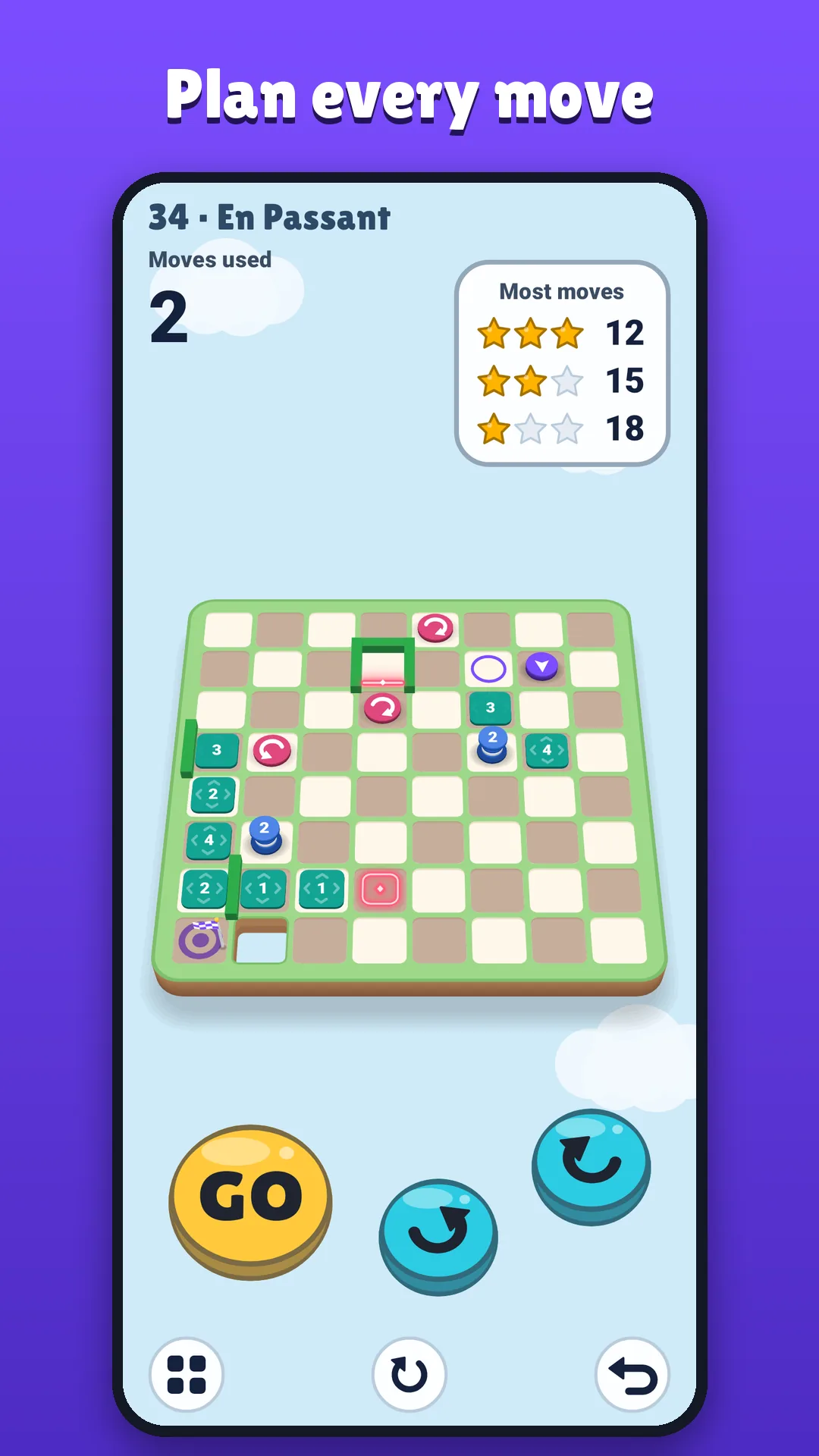
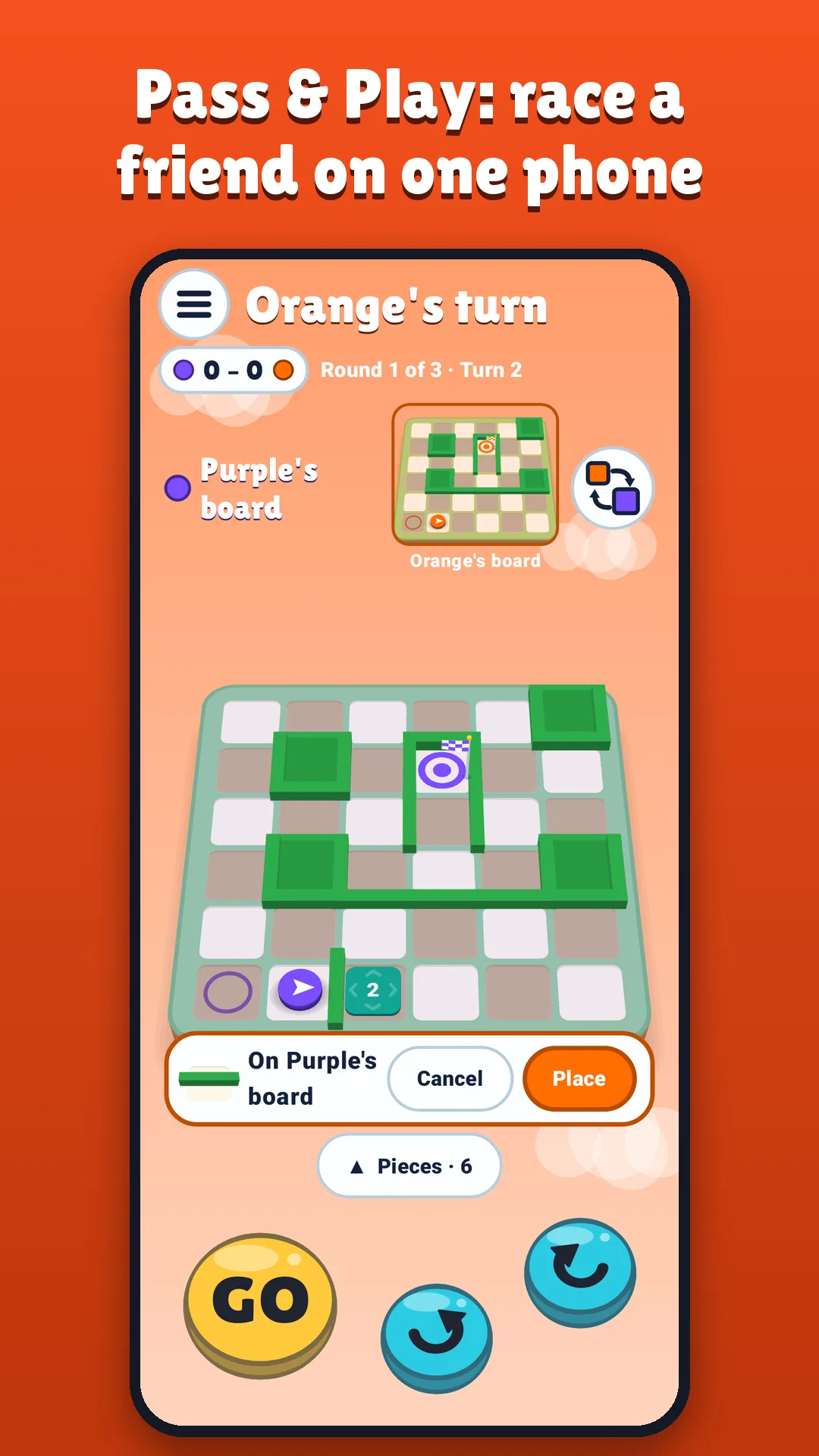
A disc that only goes forward

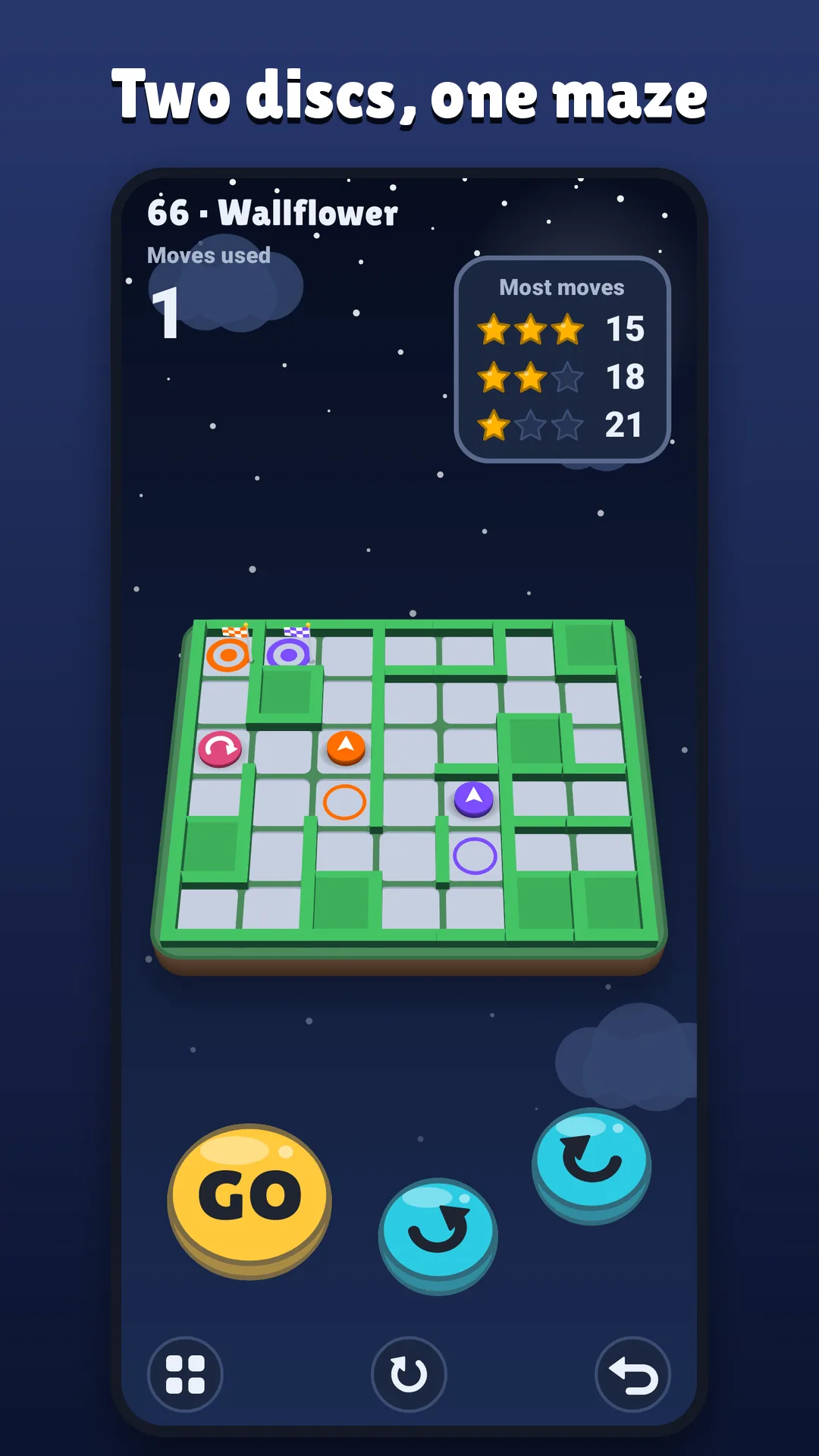
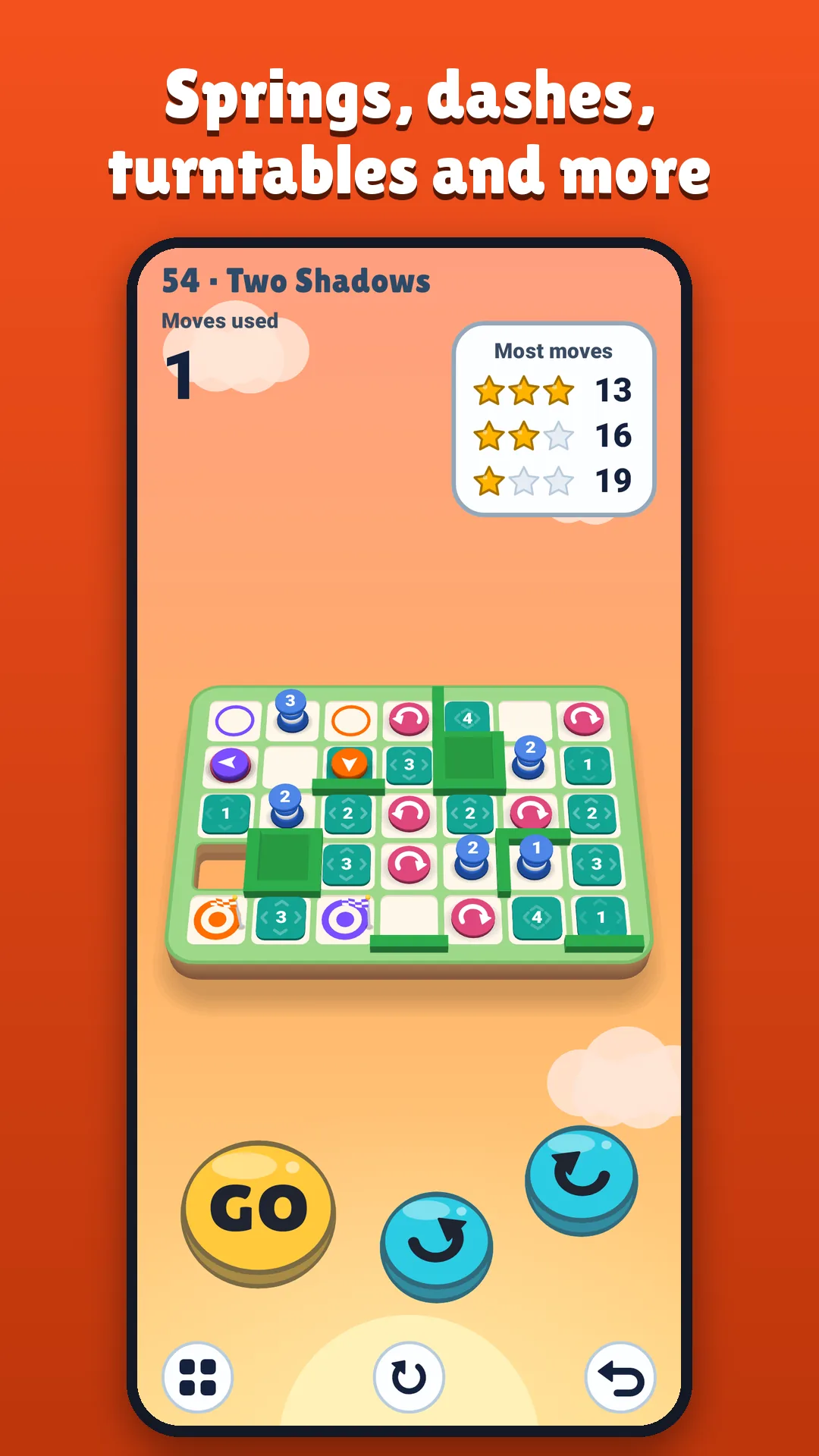
Your disc slides the way it faces, so you turn it, send it forward and try to reach the flag. Then the tiles join in: dash pads fling you along, springs jump you over walls, turntables spin you round, teleports send you across the board, and one Forward press can set off a whole chain.
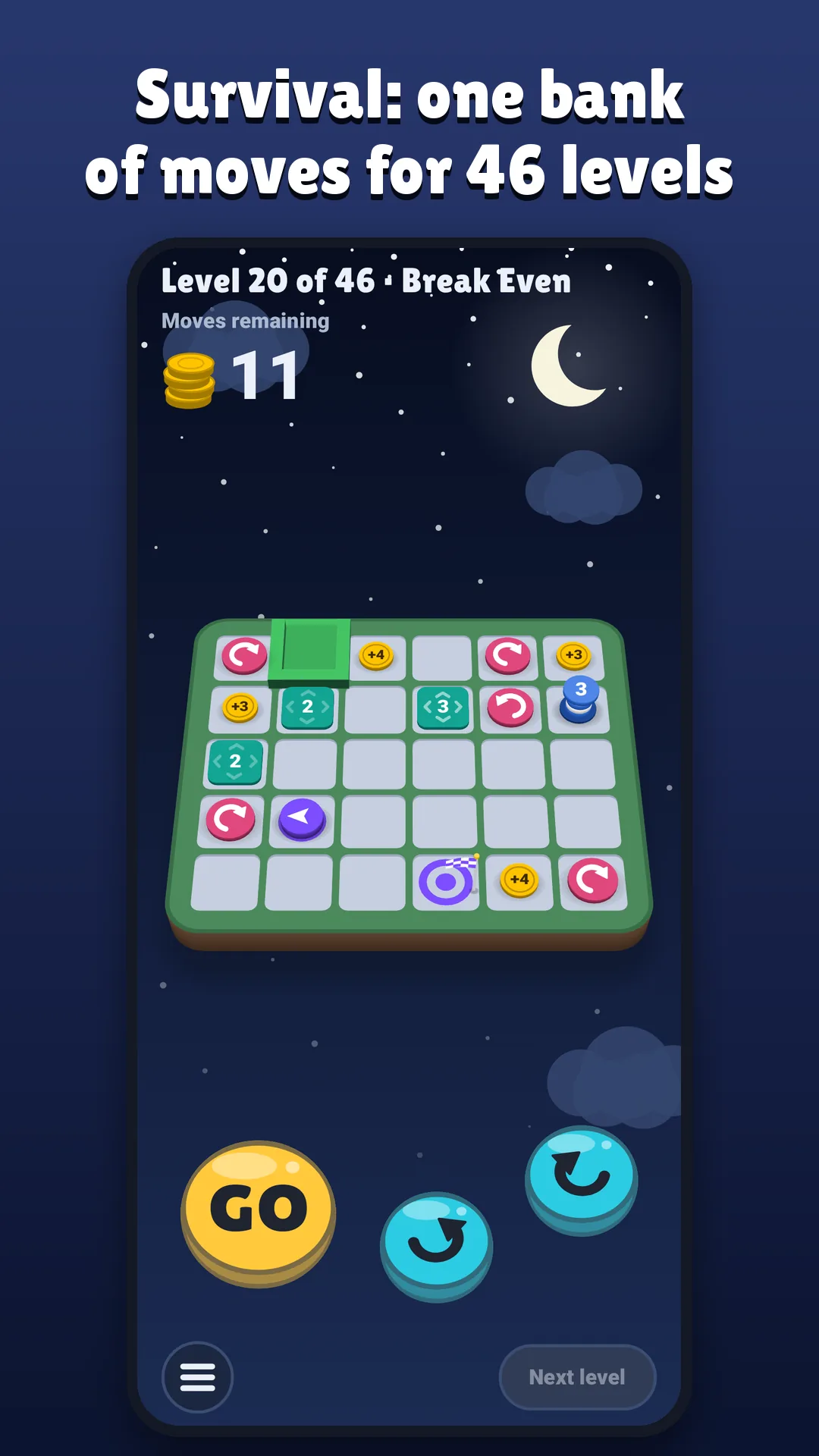
There’s no clock, but each level has a move limit. Matching the best possible route earns three stars, finishing within three moves of it earns two, and within six earns one, so you can always move on and come back later for the third star. Survival mode turns that into one shared bank of moves across a 46-level run, with gold pickups worth a detour if you can afford it and four checkpoints you can start again from.
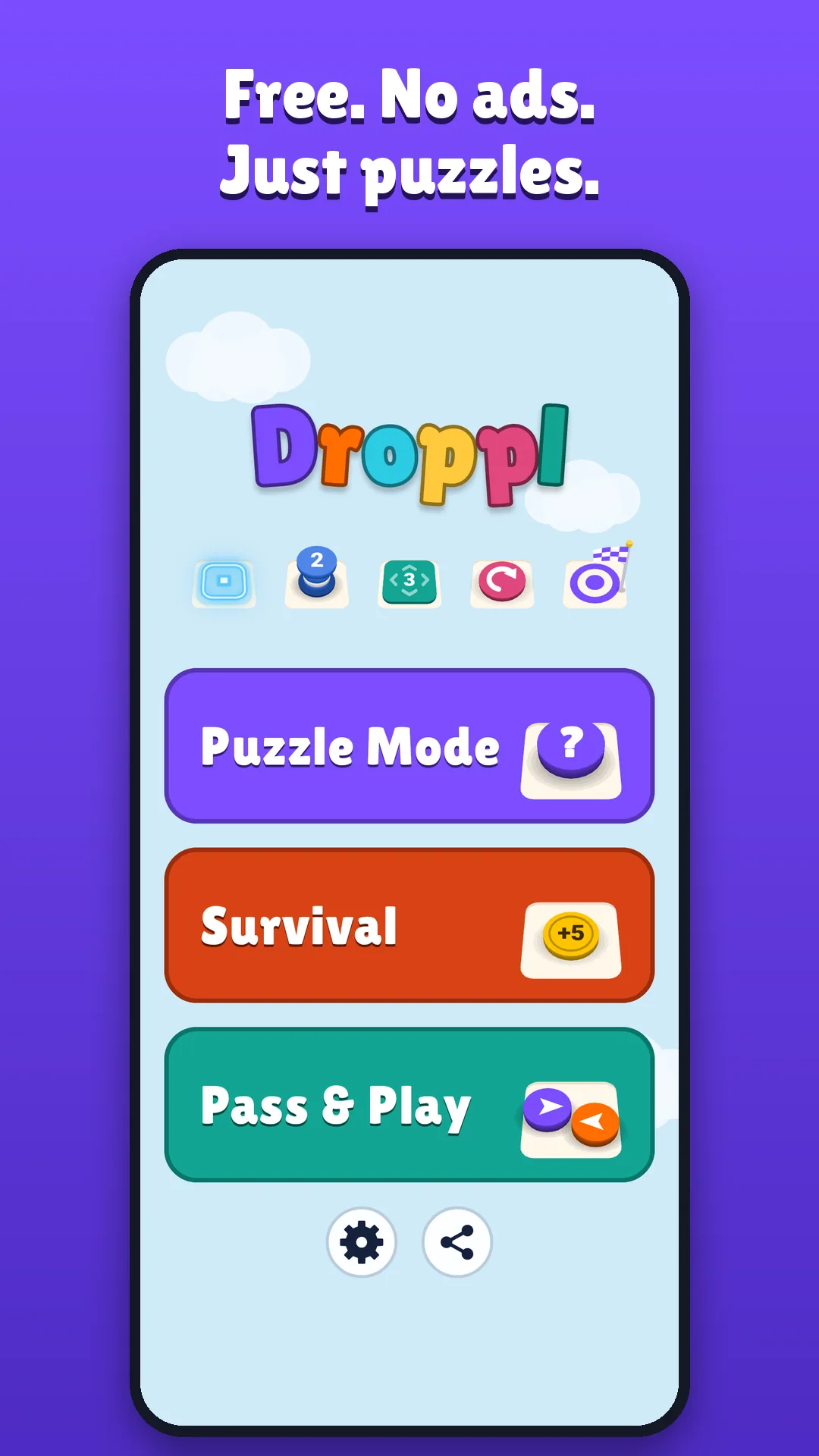
Pass & Play is for two people sharing one phone. You each race your own disc across your own copy of the board, taking turns, and on your turn you either make a move or place a piece on either board: a spring or dash pad to speed yourself up, or a wall or turntable to slow your rival down. The first to the flag wins the round, over a best of 1, 3, 5 or 7 on six boards.
It’s free with no ads, and the only purchase is an optional tip, which unlocks nothing.
Six worlds
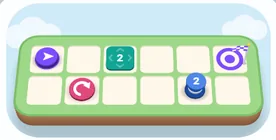
20 levels that teach one idea at a time.
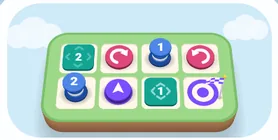
Small boards packed with surprises.
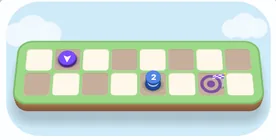
8 × 8 boards with plenty of room to go wrong.
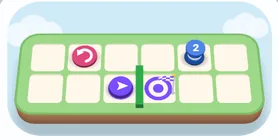
Many routes nearly work, but only one is the best.
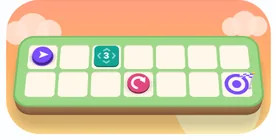
Wide boards in the evening glow.
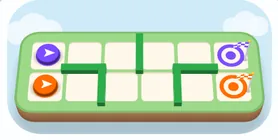
Hedge mazes for two discs that move together.
AI wrote a lot of the code, based on an original, human-grown idea.
The engine, the solver and the tests all have to match a plain-English rules document exactly, so nothing the AI writes can quietly change how the game plays.
The rules are written in plain Kotlin with no Android code, so every behaviour can be unit-tested on its own.
A search finds each level’s best route, and the build fails if any level can’t be finished within its limit. In Pass & Play it also checks every piece as it’s placed, so nobody can make a board impossible.
Simulated annealing searches for boards with exactly one shortest solution. Worlds 3 to 6 came from it, and each level was then picked and named by hand.
I can paint tiles, play-test, watch the solver’s answer and balance Survival runs, all using the real engine.
Every effect is synthesised by a script, and a chain of moves climbs a musical scale as it goes.
The icon, feature graphic and all eight screenshots are drawn by the game’s own drawing code.
Decisions that came from watching people play
Tapping either side of the board to turn was confusing when the disc faced south, so big buttons replaced it, laid out like a Game Boy’s B and A.
A puzzle about planning shouldn’t rush you, so the gap between the best route and the move limit sets the difficulty instead.
There are no ads, timers or accounts, and no data is collected. Anyone who wants to say thanks can leave a tip.
A tabletop you want to reach into
A tilted grass island with hedges and props, a starry night theme, and an app icon tested against every launcher shape.